 Türkçe
 English
 Deutsch
ITIL-Aligned ITSM Design and Examples
How we turn ITIL principles into a practical, measurable and user-friendly service management setup in Jira Service Management, with examples.

Why does ITIL matter?
ITIL is a widely accepted framework for designing, delivering and continuously improving IT services. The goal isn’t to pile on process; it’s to create a common language across teams and make service quality measurable.
Service catalog and request types
Good design starts with a service catalog that makes clear what users can request and where. With request types, smart forms and portal groups in Jira Service Management, employees can submit their needs through a self-service portal in seconds.
Incident, problem and change flows
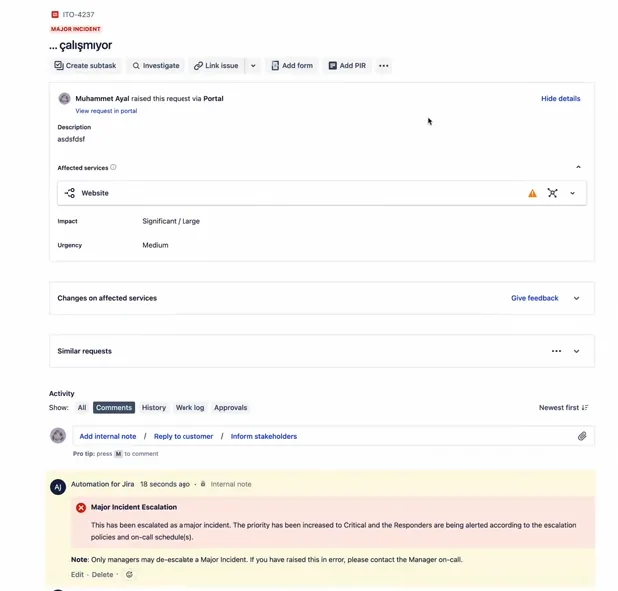
In an ITIL-aligned setup, three core flows complement each other:
- Incident: focuses on restoring service as quickly as possible
- Problem: finds the root cause of recurring incidents and delivers a permanent fix
- Change: ensures risk-assessed, approved and traceable changes
SLAs, automation and reporting
SLA targets by priority, working calendars and escalation rules ensure requests are resolved on time. Automations take over assignment and notification steps, while dashboards show managers performance at a glance.
“Good ITSM design is design where users never have to think about what to request, or where.”
Example: extending service management across the company
The same structure isn’t limited to IT. Teams such as HR, procurement and facilities can set up their own service desks to the same standards, delivering a consistent, measurable service experience across the organization.